Pak’s ISI, terror outfits radicalising state’s youth: Uttarakhand Police
The Uttarakhand Police have stated that the state's youth are being influenced by Pakistan's ISI and other terrorist organisations across the border.
India told the UN Security Council that airstrikes on Afghanistan had killed 185 civilians and warned that blocking trade routes and rising instability could deepen the country’s humanitarian and economic crisis.





Footage released by Pakistani security forces showing overnight strikes in Kabul
India has strongly criticised Pakistan over air strikes on Afghanistan, telling the United Nations Security Council that attacks during the holy month of Ramadan expose the gap between Islamabad’s rhetoric on “Islamic solidarity” and its actions.
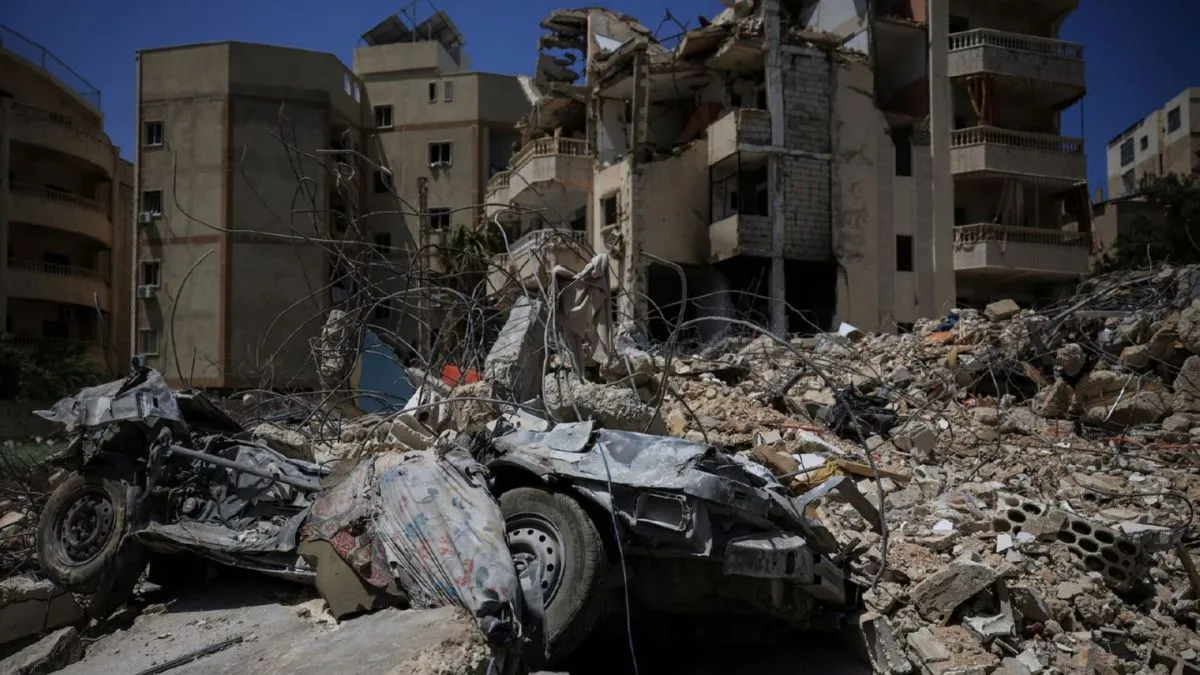
Speaking at a UN Security Council meeting on Afghanistan, India’s Permanent Representative P Harish said the strikes had caused heavy civilian casualties and violated international law. He said the attacks had killed 185 civilians as of March 6, and more than half of the victims were women and children.
Advertisement
The remarks came during a briefing on Afghanistan’s worsening humanitarian and security situation. India used the platform to highlight rising violence, trade disruptions, and the impact on ordinary Afghans, while reaffirming support for the country’s sovereignty and stability.
Advertisement
Harish told the Council that carrying out military attacks during Ramadan while speaking of religious unity was deeply contradictory.
“It is hypocritical to espouse high principles of international law and Islamic solidarity on the one hand, while mercilessly carrying out air strikes during the holy month of Ramadan,” he said.
He added that India “strongly condemns the airstrikes on Afghan territory”, describing them as clear violations of international law, the UN Charter and the principle of state sovereignty.
While Harish did not name Pakistan directly, his remarks were widely seen as aimed at Islamabad. Pakistan has said its operations target terrorist groups operating from Afghan territory.
India, however, accused Pakistan of backing militant organisations that operate across borders. Harish said the international community must work together to ensure that groups such as ISIL, Al Qaeda, Lashkar-e-Taiba and Jaish-e-Mohammed, along with their affiliates, do not continue cross-border terrorism.
He also referred to the April terror attack in Pahalgam, carried out by The Resistance Front, which left 26 people dead.
India further raised concerns about restrictions on Afghanistan’s trade routes. Harish warned that blocking access for a landlocked country would deepen economic distress.
He said the vulnerabilities of such countries “should not be weaponised.”
At the same meeting, Georgette Gagnon, Deputy Special Representative of UN Secretary-General Antonio Guterres, said the tensions between Afghanistan and Pakistan were already affecting the Afghan economy.
He noted that Pakistan had shut its border with Afghanistan, leaving the country dependent on trade through Iran. But the ongoing conflict in the region has disrupted that route as well.
As a result, the prices of basic goods have begun to rise, placing additional pressure on Afghanistan’s already fragile economy.
Gagnon warned that instability along Afghanistan’s borders threatens the country’s overall stability.
Advertisement